Menu
Concrete Driveway Care Tips for Norwalk’s Hot Summers
Concrete Driveway Norwalk
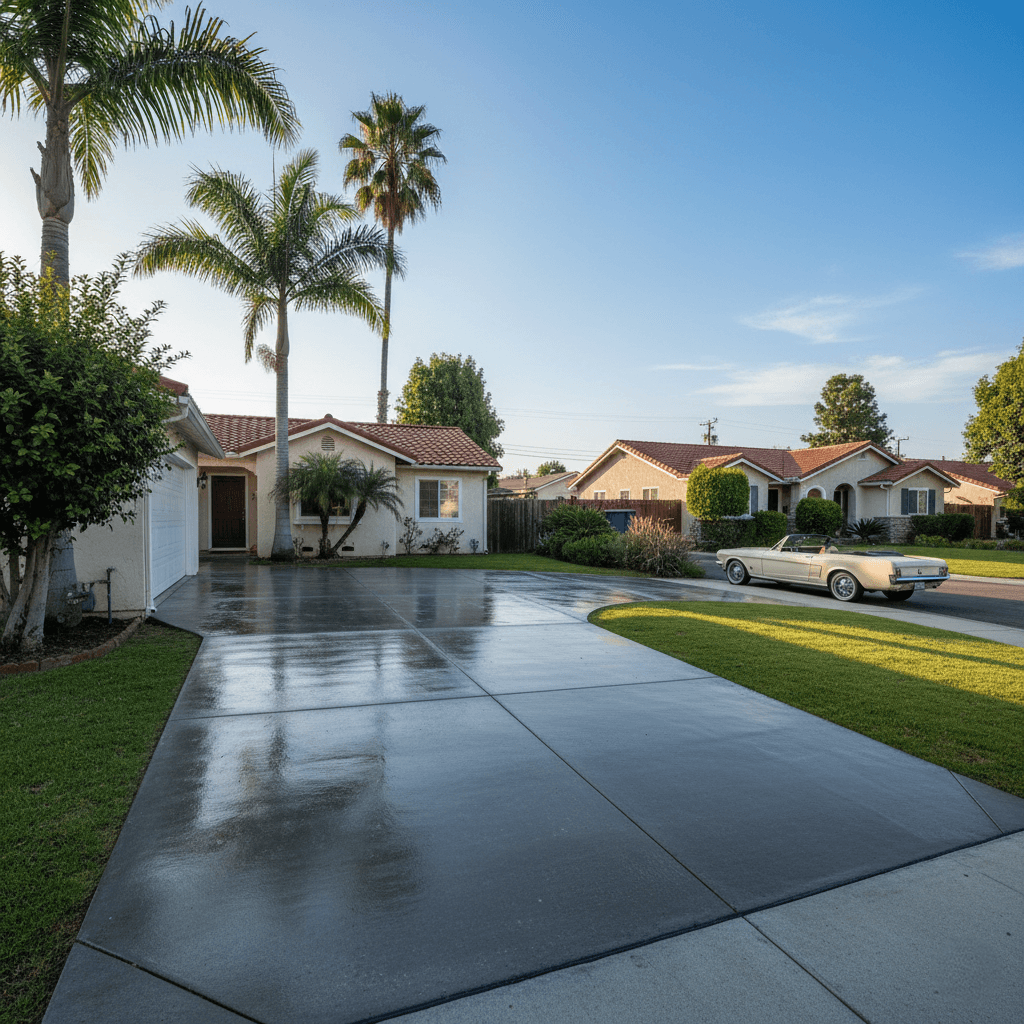
Maintaining your Norwalk concrete driveway is a very important part of keeping it safe from the heat associated with the warmer weather of Southern California’s Summer. Due to the high temperature (average of 84°F) and lack of rain from June through September, your driveway will have different problems than in other seasons. These are problems related to expansion, surface integrity, and the long-term health of your driveway. If you understand how the dry climate affects your driveway, you can take steps to maintain your driveway during the hottest times of the year. Properly maintaining your driveway during the summer will help save you money on repairs now and keep your property looking great all Summer.
Understanding Heat’s Impact on Concrete Surfaces
The rate of expansion of concrete is approximately 0.000006 to 0.000012 inches per degree Fahrenheit. The temperature fluctuation between cool mornings and hot afternoons causes constant cycles of expansion and contraction in concrete, which are significant enough to stress the structure. If this thermal movement is not managed by preventative measures, it could result in surface spalling, hairline cracks, and joint separation.
In addition to thermal movement, high temperatures accelerate the aging process, leading to surface degradation and increased porosity over time. The National Ready Mixed Concrete Association states that temperature fluctuations account for approximately 70% of all concrete cracking issues. By understanding the thermal dynamics involved, homeowners can better develop concrete sealing strategies to meet local Norwalk climate conditions.
Essential Summer Cleaning Practices
Effective summer concrete care begins with regular cleaning. In order to keep debris from accumulating and trapping heat and moisture on your surface, you need to sweep your driveway on a weekly basis. Using a stiff-bristle broom will allow you to easily sweep debris out of expansion joints and textured surface areas.
To further assist in regulating temperature, pressure wash your driveway on a 4–6 week cycle during the summer. When cleaning, use a 25-degree nozzle at a moderate level of pressure to avoid damaging the surface. Professional companies suggest cleaning in the early morning or late afternoon to minimize the risk of rapid water evaporation, which could leave mineral deposits on the concrete.
Strategic Sealing for Heat Protection
Sealing concrete surfaces with quality products provides a protective barrier against thermal stress. It is essential to schedule sealing projects for the cooler times of the year, ideally when temperatures remain between 70°F and 85°F for optimal application and curing. Do not attempt to seal during peak summer heat, as high temperatures cause the sealer to evaporate too rapidly to penetrate the surface.
For residential driveways in hot climates, penetrative sealers are generally the most effective type to use since they provide deep protection without developing surface films that could bubble or peel. Sealers should be reapplied every 2–3 years, with frequency determined by the amount of traffic the area receives and specific environmental conditions.
Temperature Management Techniques
Surfaces that are lighter in color reflect more heat than darker ones, reducing the surface temperature during peak sun exposure. Reflective coatings or light-colored sealers can be applied to reflect sunlight and heat away from the surface. Strategically placing trees or shade structures will also provide a natural cooling effect for your driveway and the surrounding areas.
Tip: Misting the surface lightly during peak afternoon heat can provide a temporary cooling effect and help maintain surface moisture. However, avoid heavily watering a hot driveway; the rapid temperature change creates thermal shock that could damage the concrete.
Crack Prevention and Early Intervention
Thermal stress is most likely to occur during the warmer months. Monitor your driveway weekly for signs of stress, such as hairline cracks or joint separation. The earlier you detect these signs, the sooner you can make necessary repairs and prevent larger structural problems. Use flexible caulk specifically designed for concrete applications to fill small cracks immediately after they are noticed.
Expansion joints undergo the most thermal stress. It is vital to keep them clean and properly sealed to prevent water infiltration and debris accumulation. Replace the sealant in the joints before summer heat increases thermal movement so the driveway can expand and contract naturally without sustaining damage.
Stain Prevention During Hot Weather
During warmer months, spills are absorbed quickly by the hot concrete, making stain removal more difficult and expensive. Be proactive in addressing oil leaks, tire marks, and other contaminants immediately. Keep absorbent materials, such as cat litter or commercial cleaners, nearby to respond quickly to spills.
Fertilizer and chemical spills are especially problematic in heat, as high temperatures accelerate chemical reactions that can permanently discolor the surface. Clean these spills immediately with cold water and use an appropriate neutralizing agent as needed. Professional maintenance recommendations include conducting monthly stain inspections during the peak summer months.
Watering and Irrigation Considerations
Driveway irrigation systems should be set to avoid puddling water on the surface during hot weather. Puddles can cause thermal stress as the water evaporates and leaves behind mineral deposits that may eventually etch the surface. Direct sprinkler spray away from driveway edges and ensure proper drainage around all concrete areas.
Systems located close to the Norwalk Civic Center or residential areas along Pioneer Boulevard require special consideration. Excessive moisture and high temperatures create the perfect environment for efflorescence. Properly slope the drainage gradient of the area and consider using permeable landscaping materials to reduce runoff onto the concrete.
Professional Maintenance Scheduling
It is best to perform major concrete maintenance projects in Norwalk during the cooler months, typically October through March. Your summer activities should focus primarily on cleaning, minor repairs, and protective measures rather than major resurfacing. Experienced contractors understand the unique demands of the Southern California climate and can advise on the best timing for specific activities.
Establishing a relationship with an experienced professional allows you to identify potential problems before they become costly repairs. Documenting your maintenance activities and recording seasonal observations will help you develop a long-term plan for your specific driveway conditions.
Long-Term Success Strategy
A successful prevention plan requires consistent efforts focused on both routine maintenance and environmental influences. Maintain accurate records of cleaning schedules and sealing projects to identify performance trends. Whether your property is located in a high-traffic area like Alondra Park or near the Santa Fe Springs border, a tailored strategy will improve the longevity of your concrete.
At Norwalk Concrete Works, we understand the challenges the Southern California climate presents to the longevity of concrete. Our complete maintenance programs include scheduled seasonal inspections, professional cleaning, and expert care designed to protect your investment through timely preventative strategies.
LATEST POSTS